Her ritual of watching and writing films became a life commitment
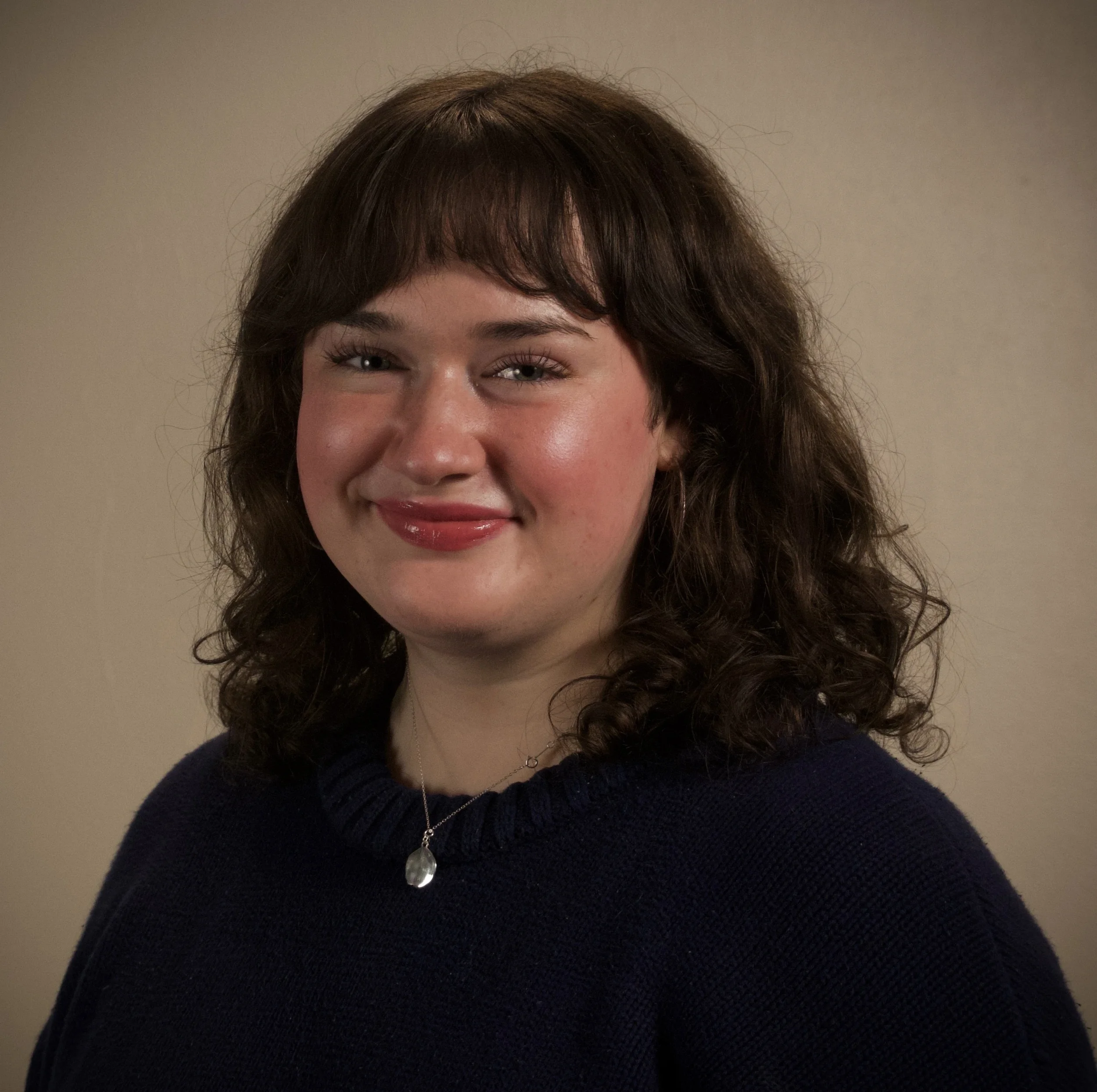
Carrara Stern, courtesy of Aftermath Thesis Project
Down the school hallways or in line at a grocery store, Carrara Stern would be an accidental witness of mundane moments and imagine them playing out in front of a camera.
Now in her fourth-year in film and media production at Humber Polytechnic, she says she’s been finding her way in the craft of filmmaking.
It really started with her mom–she’d come home from school and together they’d sit in front of the TV and watch movies. This was transformed from a routine to a ritual, then eventually to a life-long commitment; watching and making films.
Although she has always been a creatively-driven child–especially among the visual arts–Stern says she started writing scripts in high school.
“I became really obsessed with this idea of everyday mundane things being represented in movies rather than these really big events,” she said.
Boyhood and the Before Trilogy’s director, Richard Linklater, is one of Stern’s favourite directors, who she says has the gift of capturing and translating these moments through film. Boyhood was filmed over the course of nine years to truthfully capture the cast aging. The entire climax of the movie is Mason’s high school graduation, but the film doesn’t show it, and instead shows the car ride home from the ceremony.
“I’m very loving when it comes to art, and I find it just interesting to see other people's perspectives,” she said.
“In high school, I would go to the movies by myself because the movies I wanted to see were never the ones my friends wanted to see.”
Her fiery passion for films and storytelling didn’t immediately push her to strictly apply for film programs because she says she had a hard time disbelieving the tales of the creativity industry.
With the fear of never making enough money or finding stable employment, living in the back of her head, she sent applications for her safe options–marketing and English programs. But, her relationship with picking a program like film remained a complicated relationship from within.
“I definitely felt very defensive when people would ask me what I was doing in post-secondary,” she said.
“I would almost go into answering the question with this mindset that they were going to judge me even before I had proof of that.”
Then it was 2022, and she began her first year like many other students—debating whether she belonged in her program, instantly questioning every choice that led her there. In her second year, she was no longer digging at the ground, but instead she says she began finding parts of herself.
After getting a role in the art department for one of the capstone films that year, she got back in touch with her oldest passion, visual arts, and a memorable project she got to work on was making a vending machine prop.
The following fall, in her third-year, she says she got into the directing stream–what she describes as a competitive role in her program–and had the opportunity to direct a film based on a story she wrote years prior, It Lurks in the Lamplight.
This film is about two roommates having a conversation about their third roommate. While one roommate gets increasingly stressed by this conversation, she notices that there is a monster outside her window. The film brought in prosthetic makeup artists to achieve Stern’s ultimate vision, but she says this also came with some pushback.
“The end is a creepy ambiguous ending that I got a lot of heat for because people were like ‘You have to explain it,’ and I was like ‘I don’t want to,’” she said.
“I finished it, I did it how I wanted to do it, and everybody liked it.”
It Lurks in the Lamplight got into some festivals like the Toronto Short Film Festival, Toronto International Spring of Horror and Fantasy Film Festival, and Vancouver International Youth Film Festival.
Now, Stern has been working on her capstone project that’s been in the works since her second-year. After developing a few ideas for a capstone project, then selecting roles of interest–like director, producer, cinematographer–and preparing a production binder–this includes things like the script, the look-book, or the working locations–she was green-lit to direct another one of her original stories, Aftermath.
This film follows 16-year-old high school Valerie, who's dealing with the aftermath of a sexual assault. As a form to vent of what she’s experiencing, Valerie frequently vandalizes the walls of an out-of-order bathroom stall at school. Suddenly, someone starts responding to her messages with their own messages written in a bright pink marker—a game of cat and mouse begins.
“I was lucky enough to have a relationship with my friends that was very open and we would talk about these things,” she said.
“I have a lot of very strong opinions on the way that the school system handles sexual violence, and personally, the words that were being said to us weren’t actually what was being reflected emotionally for me. It is a very specific type of shame when it comes to something sexual. I think that a lot of adults are uncomfortable with the idea of children experiencing sexual violence.”
One of the predictable challenges for her capstone project was funding. The original goal for the project was $8,000. Though two days before the campaign was posted, the platform she planned to use switched from flexible to flexed funding. The goal was now as low as $4,000. Aside from crowdfunding, Stern says she was able to contribute money from festival prizes for It Lurks in the Lamplight, and her dad generously donated the remaining $2,000.
The funds will be spent on an intimacy coordinator, a makeup artist, a graphic designer, and a visual artist. But almost 75 per cent of the funds will go towards the location, which Stern says is one of the most important aspects of having a good film.
Though even in location scouting, she says the Ontario Colleges part-time support staff strike that lasted nearly five weeks this past fall, really put a toll on her program.
“We work through Megan Naylor, and she’s amazing,” she said.
“There's nobody at Humber who can really do her job besides her. So we were messaging someone filling in for her, but everything was extremely slow while we were on strike. Coincidentally or not when the strike ended and Megan came back, that's when things started moving again.”
Stern says the film and the other capstone projects will have a free screening available to the public at the Hot Docs Ted Rogers Cinema in April, but that an exact date will be available closer to.
After graduating, continuing in the art department is what Stern hopes to continue to do, especially after interning with a producer this past summer, where she made physical props, and took on roles like set decorator and camera operator.
“With the art department, I was literally not feeling it and didn't think I was going to like it,” she said.
“Learn as much about yourself as a creative as possible. If you're in school and it gives you this safe environment to play and I think that I'm going to be coming out of school with a very strong sense of myself in terms of my creativity.”